The White Rooster

UPCOMING PERFORMANCES BY TAPESTRY

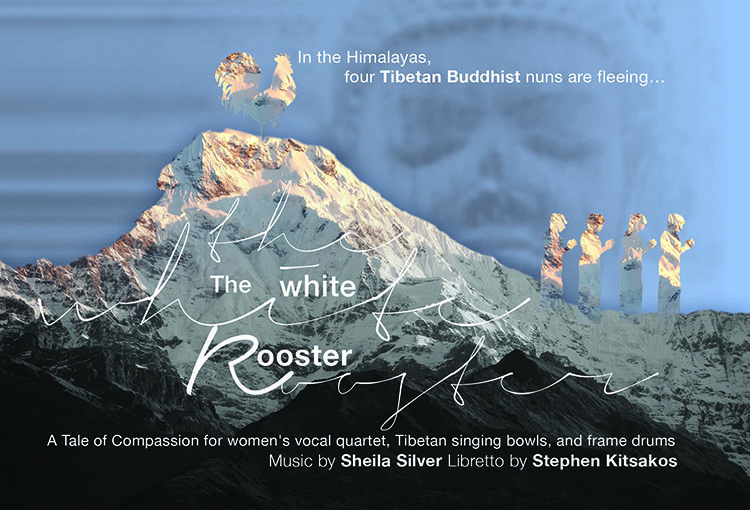
THE WHITE ROOSTER
A Tale of Compassion
Cantata for Women’s Vocal Quartet,
Tibetan Singing Bowls, and Percussion

Music by Sheila Silver
Text by Stephen Kitsakos

“The tour de force of the afternoon was a 35-minute operatic cantata, “The Tale of the White Rooster,” by Sheila Silver…The music was fascinating, using Tibetan chants, modern harmonies and interweaving original melodies with much variety.”

Priscilla McClean,Albany Times Union

Listen to Excerpt 1, Ray of Light:

Audio clip: Adobe Flash Player (version 9 or above) is required to play this audio clip. Download the latest version here. You also need to have JavaScript enabled in your browser.

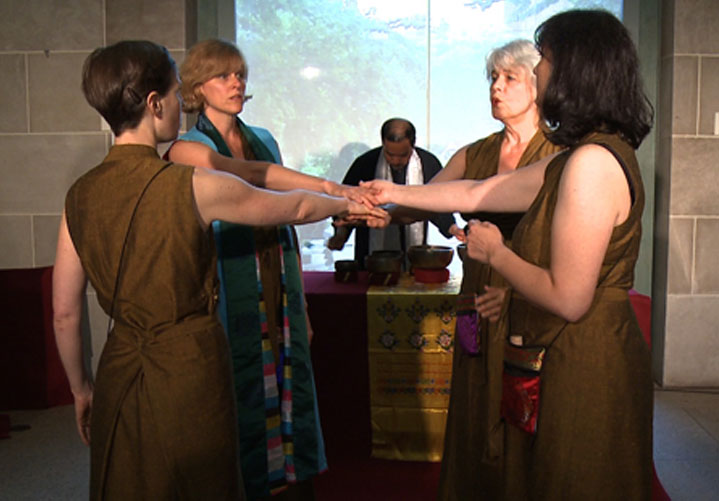
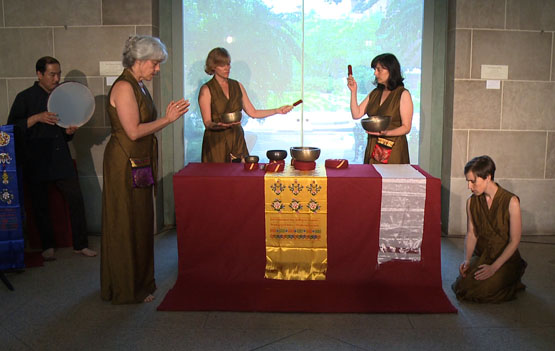
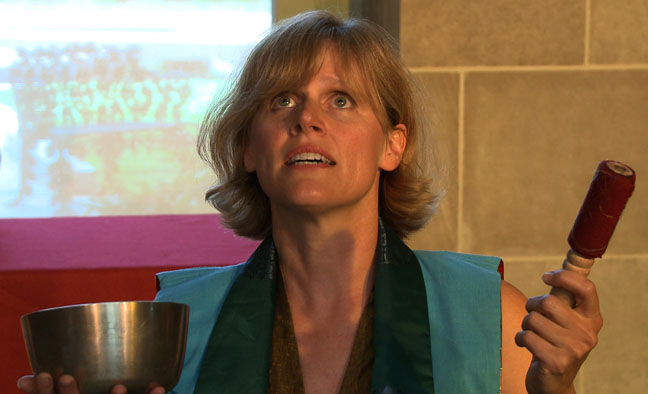
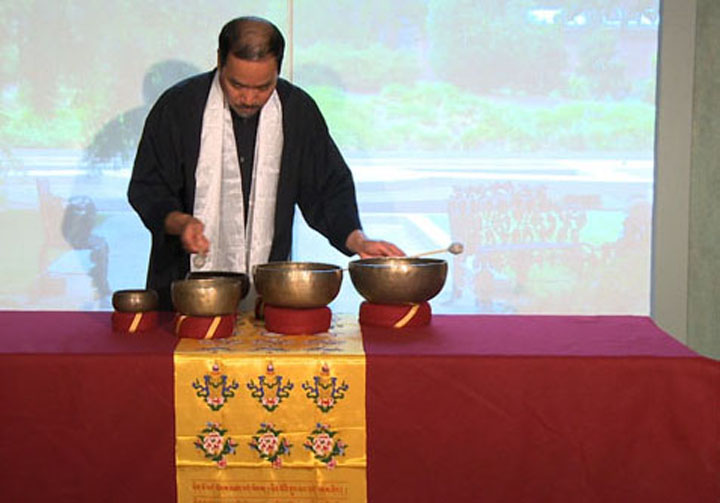
The White Rooster is a postmodern musical interpretation of a mythic Tibetan folk story placed within a contemporary setting in the tradition of a “play within a play.” Conceived for the four female voices of Tapestry, traditional Tibetan melodies are used along with chant, ensemble singing, recitative, aria, and spoken dialogue. The work’s sole instrumentation is provided by six Tibetan singing bowls performed, for the most part, by the women, while various ethnic hand drums are played by a percussionist. The piece is designed to be performed in any theater or non-theatre venue/found space.

Five Tibetan Buddhist nuns are fleeing to India when one of them is shot by a soldier. They take refuge in an abandoned hut. While nursing their wounded sister, they enact a Tibetan tale about suppression, liberation and forgiveness. In the end, help comes from a most unexpected source. Emanating a spirit of reconciliation and healing, the piece celebrates the power of individual acts of compassion.

The work was commissioned by the Smithsonian’s  Freer Sackler Gallery for their 2010 exhibit, In the Realm of the Buddha, which included works by the 17th century Tibetan monk, patron, and painter, Situ Panchen, as well as The Tibetan Shrine from the Alice S. Kandell Collection.  The cantata was premiered in July 2010 and is currently being toured internationally by TAPESTRY.

Listen to Excerpt 2, Namo Buddhaya:

Audio clip: Adobe Flash Player (version 9 or above) is required to play this audio clip. Download the latest version here. You also need to have JavaScript enabled in your browser.


The story is as follows: five Tibetan Buddhist nuns are fleeing into exile to Dharamsala and take refuge in an abandoned hut on the outskirts of a Tibetan village, not far from the Indian border, after one of them has been shot by an occupying border soldier. (We must imagine the wounded sister lying on the floor, in front of the altar.) After singing healing prayers, another sister enters the hut reporting that she has gathered some healing herbs and food from the village but that the only doctor in the village is one of the occupying foreigners and thus forbidden by his authorities to help anyone protesting or trying to escape Tibet. The nuns wonder if they made the right decision to embark on this journey but Tsomo, the eldest nun, calms their fears and reminds them of their Buddhist vows.

Listen to Excerpt 3, In a house by a lake:

Audio clip: Adobe Flash Player (version 9 or above) is required to play this audio clip. Download the latest version here. You also need to have JavaScript enabled in your browser.

The nuns then decide to enact the ancient tale of the White Rooster in order to pass the time and help their sister heal. One of the nuns, Tsering, assumes the role of the young nomadic girl, Diki, while Yangchen becomes the White Rooster, wrapping herself in a white scarf. The other two will narrate. Diki and her two sisters live happily with each other and their herd of yaks. They care for one another and their animals, who provide all of their livelihood. One day, Diki’s herd of yaks mysteriously disappears, and searching for them, she hears a beautiful voice singing and comes upon a white rooster who speaks in her tongue. He promises to help her find them if she will come back the next day, and when she does, he begs her to marry him – he is lonely — and in exchange he will care for her and her sisters. Realizing that he “is no ordinary bird,” and, out of compassion for him, she agrees and passes a pleasant year at his side. Then, one night, wandering out in the moonlight, she follows the sound of his singing to discover a “handsome young man arms stretched to the skies.” She quickly returns to the cave and sees that the white rooster’s skin is lying on the floor. Realizing that the young man and the white rooster are the same, she throws the rooster’s skin into the fire hoping to release him from whatever spell enchants him. But the young man returns and reveals that she has done the worst possible thing. As a prince he rebelled against the demons and they punished him by transforming him into a white rooster. He was forced to remain in this state except for one hour each night when he could be his true self. Without the skin he is now doomed to be the slave of the demons forever.

The only way for him to be liberated is if she takes on the white skin. The skin is magically returned and they all begin to chant but Diki remains unsure of what to do.  The chanting grows to a heightened passion when….the power and mystery of this moment is broken by a knock on the door. It is the foreign doctor (played by the percussionist) who has heard their singing and been drawn by its power. The nuns are suspicious and fearful that he will report them, but he convinces them to let him treat their sister. The doctor extracts the bullet from the injured nun as the women chant together. Asking him why he has saved this life, the doctor says, “I too have suffered. I save this life gladly — every act of kindness counts.” Tsomo then lovingly presents him with the “khatag” (white scarf and symbol of respect) that they have been using as a prop for the white rooster. The four nuns chant the Om Mani Peme Hung while, for the first time, the percussionist/doctor plays all six bowls.

Listen to Excerpt 4, Om Mane Peme Hung:

Audio clip: Adobe Flash Player (version 9 or above) is required to play this audio clip. Download the latest version here. You also need to have JavaScript enabled in your browser.


The cantata incorporates 5 Tibetan mantras:

  • Teyata Om Bekanze Bekanze Maha Bekanze Ranze Samungate Soha – a traditional healing mantra.
  • Namo Buddahya, Namo Dharmaya, Namo Sanghaya – calling on Buddha, Dharma, and Sangha for support (composed to an original melody by Sabchu Rinpoche.)
  • Om Tare Tutare Ture Soha – calls on Mother Tara (or Green Tara) to release one from fear and suffering.
  • Om A Hung Benza Guru Pema Siddhi Hung – the Vajra Guru Mantra associated with Padmasambhava (based, in part, on a traditional melody).
  • Om Mane Peme Hung – traditional Tibetan mantra invoking the power and benevolence of Chenrezig, the embodiment of compassion (based, in part, on a traditional melody).

(Read libretto – PDF)

The score bears the following dedication:

The White Rooster is dedicated to the memory of my sister, Susan Silver, who maintained her dignity, compassion, and empathy for others, in spite of the demons who plagued her throughout her life.

I would like to extend a special thanks to Sabchu Rinpoche, not only for his insights and explanations of Buddhist philosophy which were invaluable in shaping the libretto, but for his beautiful chanting and singing which inspired the settings of many of the mantras. OM MANI PEME HUNG and OM A HUNG BENZA GURU PEMMA SIDDHI HUNG are based, in part, on traditional Tibetan melodies. NAMO BUDDHAYA is based on an original melody composed by Sabchu Rinpoche.

Sheila Silver